


24 Oct How Positional Width Variation Can Help Win Matches
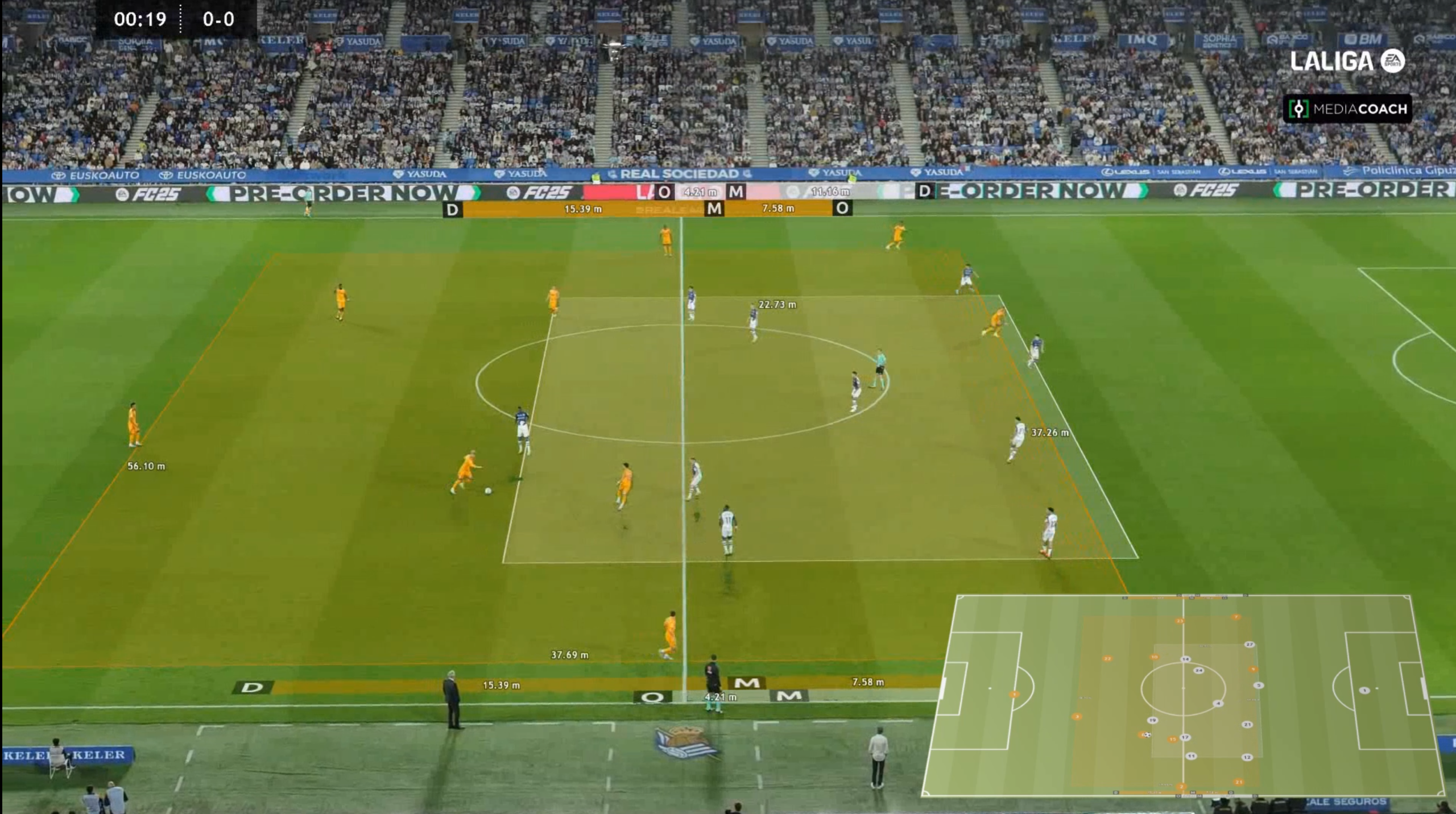
In professional football, the smallest details can make a big difference. A slight variation in tactical positioning or the way a team presses the opponent can be decisive. Recent research using data from matches in the 2023/24 LALIGA EA Sports Season reveals that the key to improving a team’s performance during a match might lie in something as simple, yet complex, as variation in positional width, both with and without possession of the ball.
This study has uncovered key patterns that can help coaches adjust their strategies and training sessions to improve second-half results. Below, we break down the main findings and explain how they can be applied practically in the day-to-day operations of a professional football team.
Methodology: How Was It Analyzed?
The research was conducted using contextual data from matches in the 2023/24 LALIGA EA Sports Season, which included detailed information about match scorelines, ball possession, and variations in a team’s positional depth in both the first and second halves. The analysis focused on matches where the halftime score differed from the final score, dividing the teams into two groups:
- Teams that improved the result in the second half.
- Teams that worsened the result in the second half.
The aim was to understand how positional width (global, with possession, and without possession) varied throughout the match and how these variations impacted changes in the result. The study measured global width variation, with possession, and without possession, comparing the team’s positions between the first and second halves.
1. Reducing Width Without Possession for Defensive Solidity
Teams that improved their results in the second half showed a clear trend: narrowing their lines when they didn’t have possession. The data shows that these teams managed to achieve an average reduction of 0.17 meters in their depth without possession. This means that when the opponent had the ball, these teams tended to maintain a more compact shape, limiting space and reducing the opponent’s ability to break through.
How Does This Translate to Match Situations?
In match situations, especially when a team is trailing or during crucial moments in the second half, a key adjustment is to reduce width without possession, tightening defensive and midfield lines. This limits the opponent’s space and can help the team regain control of the game, buy time, and create opportunities for more effective counterattacks.
2. Expanding Width with Possession to Be More Dangerous
On the other hand, teams that improved their results also tended to increase their width when in possession. In fact, they displayed an average increase of 0.23 meters in the second half when they had the ball. This allowed them to occupy more space on the pitch, stretching the opposition and opening up passing lanes that created more attacking opportunities.
How Does This Apply to Training?
A key takeaway for training sessions is to work on expanding positional width when the team has possession, encouraging players to push forward and take up more advanced positions. This offensive movement can be decisive in stretching the opposition’s lines, allowing forwards or creative midfielders to exploit the spaces created.
3. Avoid Increasing Width Without Possession
In contrast, teams that worsened their results in the second half often made the mistake of significantly increasing their width without possession, with an average increase of 1.23 meters. This increase in depth without the ball caused teams to become more spread out and vulnerable, creating gaps between their lines that the opponent could exploit.
How Does This Apply to Tactical Planning?
The study suggests that during the second half, coaches should avoid allowing their teams to become too spread out without the ball. Instead, they should focus on defensive compactness, preventing gaps between defense and midfield lines. This can be worked on in specific training exercises, reinforcing the concept of a compact defensive block during defensive phases.
Conclusion: Practical Application for Coaches
This study offers clear and actionable insights for professional football coaches. Positional width variation is a key tool that can be used to adjust a team’s performance during a match.
- Narrowing lines without possession and expanding width with the ball are two clear strategies that, according to data from the 2023/24 LALIGA EA Sports season, have proven effective in improving second-half results.
- Conversely, becoming more spread out without possession is often a mistake that leads to worsened outcomes.
Coaching staff can apply these findings when designing their training sessions and in tactical planning, focusing on how to adjust team shape based on match circumstances.