


21 Mar ACTN3 XX Genotype Negatively Affects Running Performance and Increases Muscle Injury Incidence in LaLiga Football Players
This study looks at how a single genetic trait can influence what happens every weekend on the pitch. It focuses on ACTN3, a gene linked to fast and powerful muscle actions. In elite football, those actions decide duels, sprints, transitions, and injuries.
The researchers followed 315 professional players from LaLiga across a full season. Real match data were used. Not tests. Not simulations. Actual competitive performance and real injuries. This makes the findings highly relevant for professional environments.
Players with the ACTN3 XX genotype ran less during matches. The difference was not in jogging or low-intensity movement. The gap appeared where football is decided. High-intensity running. Repeated sprints. Sustained efforts above 21 km/h. XX players performed fewer sprints and could not maintain them for as long. Over a season, this small gap becomes a big difference.
From a coaching perspective, this matters in pressing systems, transition-heavy models, and teams that rely on repeated high-speed actions. An XX player can still be elite. But the physical cost of playing at high intensity is higher. The margin for error is smaller.
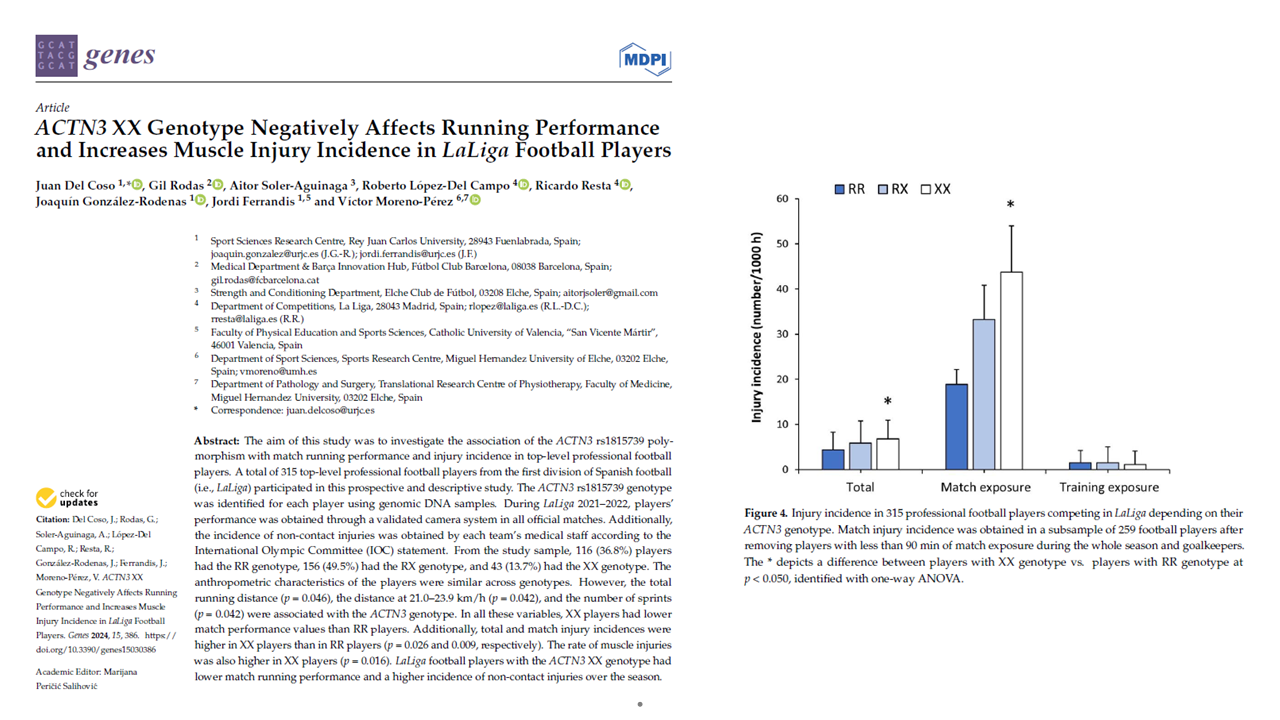
Injury risk is the second key message. XX players suffered more non-contact injuries, especially during matches. Muscle injuries were clearly higher. Bone injuries were also more frequent. Training injury rates were similar. The problem appears when intensity peaks and fatigue accumulates on match day.
This has direct implications for load management. An XX player may tolerate training well but break down in competition. Recovery strategies, match exposure, and sprint volume must be managed with precision. One-size-fits-all approaches increase risk.
Squad-level patterns are also revealing. Top-ranked teams had fewer XX players. Teams with a higher proportion of XX profiles tended to finish lower in the table. This does not mean genetics selects teams. It means physical availability and repeatability matter across a long season.
For performance staff, the takeaway is clear. Genetic information should not label players. It should inform decisions. Sprint exposure. Rotation. Recovery windows. Injury prevention strategies. Especially in congested calendars.
For coaches, this explains why some players rely more on positioning, timing, and game intelligence. They may compensate physically through tactical excellence. Understanding this helps align expectations and roles.
This paper does not suggest excluding players. It suggests understanding them better. When physical demands meet genetic constraints, smart management becomes a competitive advantage.