


20 Mar Do the Competitions Played During Congested Weeks Influence the External Load of Spanish Soccer Teams? Analysis by Match Playing Time
Congested weeks change everything. Not just how much players run. But how they run. And why.
This study shows a simple idea with big consequences. Not all congested weeks are the same. A Champions League week is not a Cup week. And a starter is not the same as a non-starter.
If you treat them the same, you will get the wrong answers.
The data comes from elite football. Top LaLiga teams. Full season. Real match context. That makes the message clear for practice.
The first key point is pacing.
During congested weeks, players increase low-intensity running. More walking. More jogging. Less constant intensity. This is not a drop in performance. It is a strategy.
Players protect themselves. They manage energy to be ready for key actions.
For coaches, this matters. A lower intensity profile does not always mean lower effort. It often means smarter effort.
The second key point is competition context.
Not all competitions create the same physical response.
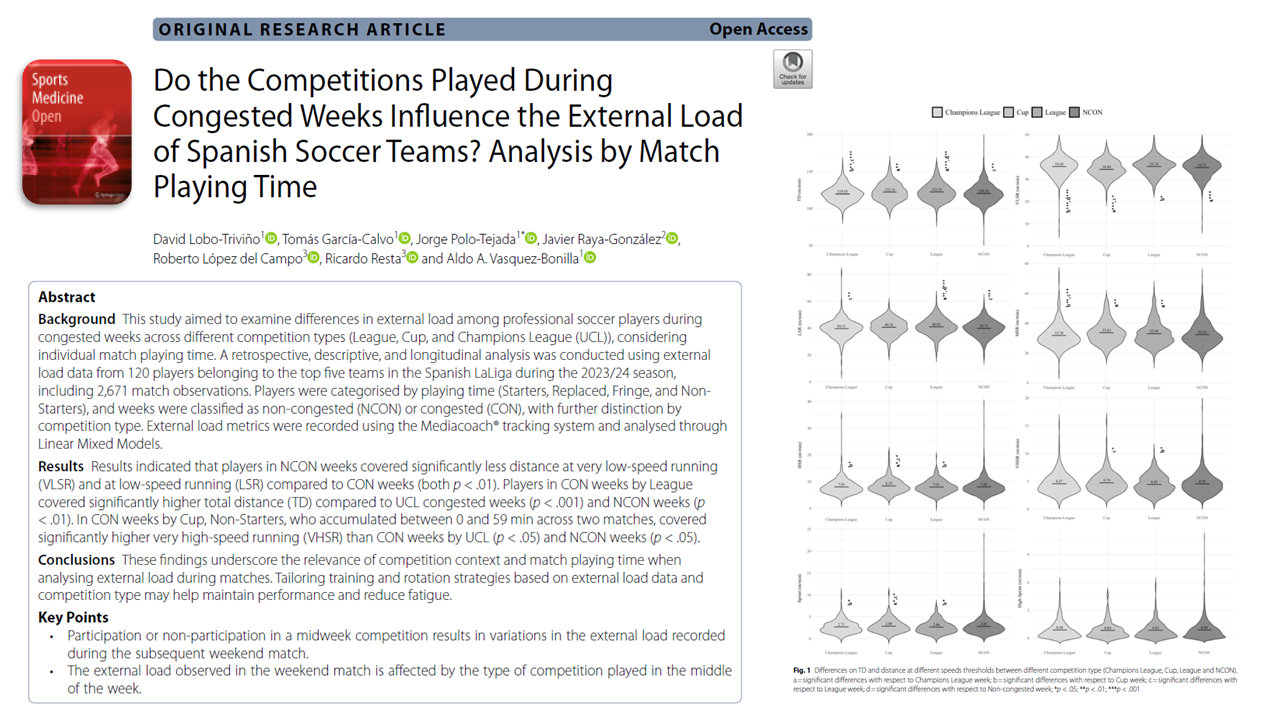
Champions League weeks show lower total distance. But more accelerations. The game becomes more explosive. More tactical. Less space. Higher demands in short actions.
League matches during congested weeks show higher total distance. The rhythm is different. More continuity. More volume.
Cup matches create another scenario. More rotation. More opportunities for non-starters. And this changes the physical output completely.
If you ignore competition type, you misread the load.
The third key point is playing time.
This is where the biggest practical gap appears in many clubs.
Non-starters behave differently. They run more at high intensity. They sprint more. They accumulate more high metabolic load in less time.
Why? Because they are fresh. And because they know their window is short.
Starters are different. They manage effort. They accumulate fatigue across matches. Especially in weeks with European competition.
This creates two very different physical realities inside the same team.
If training does not reflect this, performance drops.
The fourth key point is the interaction between both factors.
Competition type and playing time do not act alone. They interact.
In Cup weeks, non-starters reach the highest high-speed values. They are fresh. They play more minutes than usual. And they push harder.
In Champions League weeks, starters show signs of fatigue. High-speed actions drop. Recovery is limited. The game demands more tactical discipline.
This is where planning becomes critical.
The study shows that what happens midweek directly affects the weekend match. Not just globally. But individually.
Players who played more minutes midweek arrive with a different physical profile. Their capacity to perform high-speed actions is reduced.
This has direct implications for training.
You cannot plan the week only around the match schedule. You must plan around who played. How much. And in which competition.
Recovery becomes a performance tool.
Players exposed to high minutes, especially in high-demand competitions, need targeted recovery. Not generic recovery.
At the same time, non-starters need top-up work. But not just volume. They need intensity. Because their match exposure is short but explosive.
This is where many teams fail. They equalise load. Instead of individualising it.
The study also highlights an important risk.
High-intensity actions tend to drop when recovery is insufficient. Especially after high-level matches. This can increase injury risk and reduce performance in decisive moments.
For performance staff, this is a warning.
Monitoring external load is not enough. You must interpret it in context.
A drop in sprint distance is not always tactical. It can be fatigue.
An increase in low-speed running is not always negative. It can be pacing.
A high output from non-starters is not always a success. It can reflect imbalance in load distribution.
Everything depends on context.
The practical message is clear.
Plan by competition.
Plan by minutes played.
And plan by individual response.
Rotation is not only tactical. It is physical.
Recovery is not only medical. It is performance.
And match analysis is not only about the game. It is about what the game does to the players.
If you align these three areas, you maintain performance across congested periods.
If you do not, fatigue decides for you.