


23 Ene Defensive Dead Space: The New Metric to Analyze and Optimize Defense in Football
In professional football, defensive organization is key to maintaining balance in the game and neutralizing the opponent’s threats. At the Football Intelligence & Performance Area of LALIGA, we have developed an innovative new metric: Defensive Dead Space. This indicator analyzes, second by second, how compact and efficient a team’s defense is. Based on geometric concepts like the convex hull and the amplitude and depth rectangle, this tool provides practical insights to improve training sessions and defensive strategies.
What is Defensive Dead Space and How Does It Work?
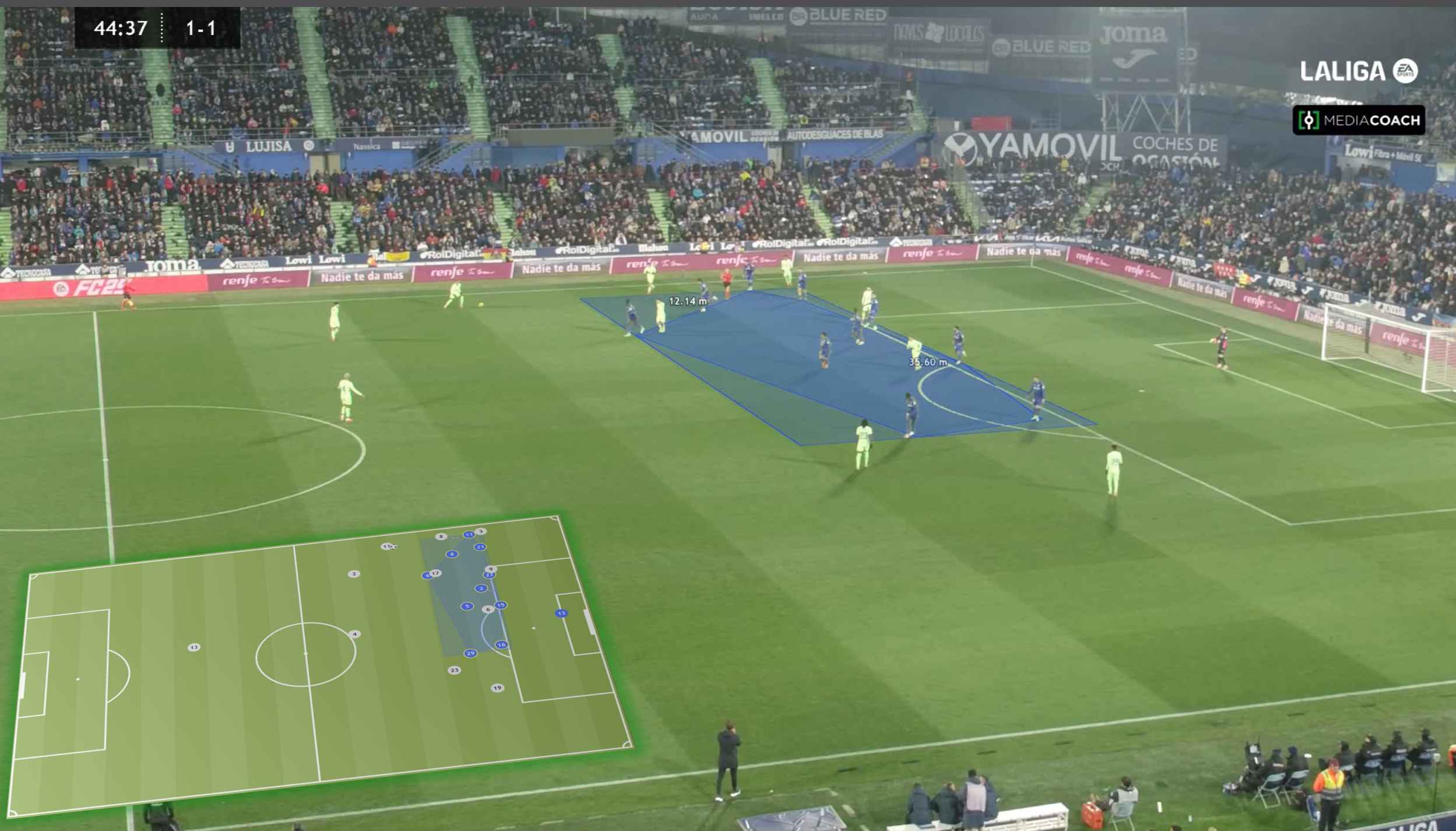
Defensive Dead Space measures the unoccupied areas within the rectangle that delimits a team’s defensive space. These «dead zones» are vulnerable areas that opponents can exploit. The analysis relies on two key elements:
- Convex Hull: Represents the active area occupied by the team, connecting the outermost players in the formation.
- Amplitude and Depth Rectangle: Defines the outer boundaries of the team based on the most advanced, deepest, and widest players.
The smaller the difference between the convex hull area and the rectangle, the lower the defensive dead space, and the more compact the team.
Key Findings and Practical Applications for Coaches
1. Less defensive dead space = better organization.
- Teams that minimize defensive dead space are generally more effective in their defensive phases, making it harder for opponents to progress. These spaces are particularly critical for passes between the lines or quick switches of play.
- Practical Tip: Design drills where players coordinate their movements to cover key spaces. Group shifting and structured pressing exercises can help reduce these vulnerable zones.
2. Defensive transitions and their impact on dead space.
- Our analysis reveals that one of the primary causes of large defensive dead spaces occurs during transitions.
- Main Cause: Certain players, usually with an offensive profile, fail to return quickly enough to their assigned defensive positions within the block. This creates temporary imbalances that opponents can exploit.
- Practical Tip: Incorporate transition exercises into training sessions where all players, regardless of their offensive or defensive roles, understand the importance of returning quickly to their positions. This fosters a collective defensive mindset.
3. Compactness tailored to tactical contexts.
- While minimizing defensive dead space is generally desirable, there are tactical situations where maintaining certain empty spaces is justified:
- High Press: In a high block, dead spaces in the defensive half can be an acceptable risk to recover the ball closer to the opponent’s goal.
- Adjusting to Switches of Play: During some phases, players may temporarily be out of alignment as they reposition to respond to tactical changes.
- Covering Wide Channels: In a low block, prioritizing central areas may leave lateral spaces uncovered without compromising overall defensive balance.
- Practical Tip: Train players to recognize when dead spaces are an acceptable risk depending on the game plan. This encourages a flexible and adaptable defense.
Top 3: Most Compact Teams in LaLiga EA Sports (Matchday 20, Season 2024/25)
Our defensive dead space analysis identifies the most compact teams in LaLiga. According to the data, the teams that have minimized this space the most are:
- Getafe CF: Defensive Dead Space Index: 0.1596
- Atlético de Madrid: Defensive Dead Space Index: 0.2244
- RCD Mallorca: Defensive Dead Space Index: 0.2260
These teams stand out for their exceptional tactical organization and ability to reduce vulnerable spaces in defense.
How to Integrate This Analysis into Matches
- Strategic Planning: Evaluate your team’s defensive dead space and that of your opponent to identify strengths and weaknesses. Use it as a reference for planning strategies.
- Player Feedback: Show players visual examples of how dead spaces are created and reduced. This fosters a deeper tactical understanding.
- Post-Match Analysis: Use this metric to assess defensive performance and adjust training sessions or strategies based on the results.
Conclusion
Defensive Dead Space represents a revolution in football tactical analysis. Not only does it offer a detailed view of defensive organization, but it also helps identify the causes of defensive imbalances. Recognizing that transitions—especially when offensive players fail to return quickly—can significantly influence the creation of dead spaces is key to adjusting strategies and training sessions. Reducing these spaces doesn’t always mean avoiding risks but rather managing them intelligently to build a more solid and balanced defense.