


08 May Effect of the phase of the season and contextual variables on match running performance in Spanish LaLiga football teams
Modern elite football is not played at the same physical level every week of the season. This study shows that clearly. Using full-season tracking data from LaLiga, it explains when teams run more, when they run less, and why. The message for practitioners is simple. Match demands are not stable. They change with time, context, and opponent quality.
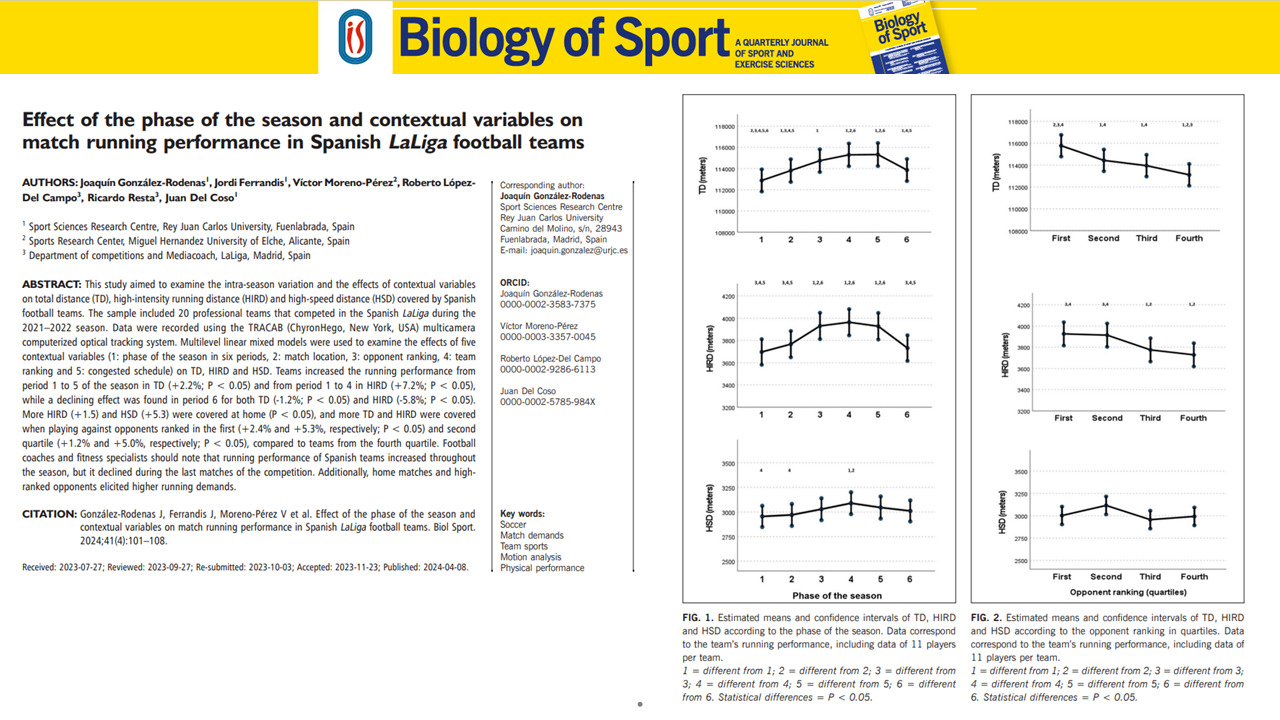
Across the season, team running performance follows an inverted U-shape. Teams do not reach their highest physical output at the start of the competition. Total distance and high-intensity running progressively increase during the first months. Peak values appear in the middle phase of the season, roughly between matchdays 20 and 30. After that point, performance declines. The final matches show lower total distance and less high-intensity running.
This has direct implications for season planning. Preseason prepares players to compete, but not to perform at peak match intensity. Teams still need competitive exposure to reach their best running output. Coaches should not expect maximum physical performance in the first weeks. At the same time, the end of the season requires protection. Accumulated fatigue, stress, and injury risk coincide with a drop in running output. Training and recovery strategies must anticipate this decline, not react to it.
Match location also matters. Home matches consistently generate higher high-intensity and high-speed running than away matches. Total distance remains similar, but intensity changes. At home, teams sprint more and perform more demanding actions. This likely reflects tactical intent, emotional factors, and game control. For performance staff, this means that home games are not “easier” physically. They often require greater neuromuscular readiness and recovery support.
Opponent quality is another key driver of match demands. Playing against top-ranked teams increases total distance and high-intensity running. These matches force teams to defend more, move faster, and react under pressure. The physical cost is higher regardless of the team’s own ranking. This reinforces an important idea for match preparation. Load expectations should be opponent-specific, not based only on recent team form or league position.
Interestingly, congested schedules did not reduce team running output. Even when teams played twice in the same week, total distance and high-speed running were maintained. This does not mean congestion has no cost. It means that teams preserve external output, possibly at the expense of internal load, recovery quality, or injury risk. Running metrics alone do not tell the full story. Monitoring accelerations, decelerations, fatigue markers, and individual responses remains essential.
Team ranking itself showed no clear association with running performance. Better teams do not win because they run more. They win because they run better, at the right moments, often with the ball. This study reinforces a key message for analysts and coaches. Physical output is a tool, not a guarantee of success.
For elite football environments, the practical takeaway is clear. Match running demands must be contextualized. Season phase, match location, and opponent level should shape weekly planning, recovery strategies, and performance expectations. Treating every match as physically equal is a mistake. Teams that anticipate these variations gain a competitive edge.