


17 Sep Integrating video tracking and GPS to quantify accelerations and decelerations in elite soccer
Monitoring accelerations and decelerations is one of the keys to understanding the real physical demands in elite football. Traditional metrics like total distance or top speed often miss the true workload players face when starting, stopping, and changing direction at high intensity.
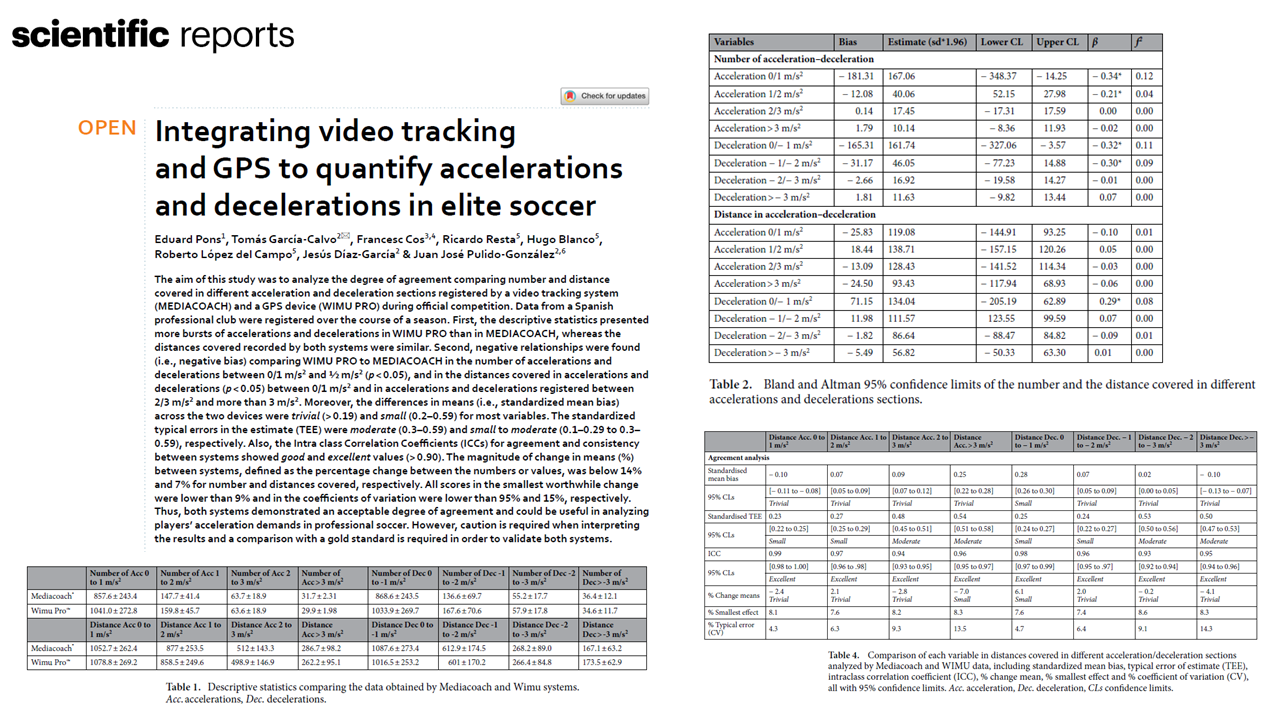
This study compared two of the most used tracking technologies in professional football: Mediacoach (video tracking) and WIMU PRO (GPS). Data were collected across an entire season in official matches. The findings show that while GPS tends to detect more low-intensity accelerations, and video tracking slightly more high-intensity ones, both systems provide reliable and consistent data when it comes to measuring player load.
Why does this matter for your daily work as a coach or performance analyst?
- Training load management: By tracking accelerations/decelerations, you get a clearer picture of mechanical stress and muscle fatigue risk, especially important in congested fixture periods.
- Injury prevention: Decelerations in particular place a high eccentric load on the muscles. Knowing the volume and intensity helps design recovery and reconditioning strategies.
- Match preparation: Different playing styles and tactical demands change the acceleration/deceleration profile. Combining GPS and video tracking offers a tactical–physical integration that supports better decision-making.
- Data integration: The study even provides equations that allow practitioners to translate data between GPS and video tracking, ensuring continuity in load monitoring even if devices change.
In short, both systems can be trusted for quantifying real match demands, but practitioners must be cautious with extreme values (>3 m/s²). Understanding these nuances allows for smarter training design, improved recovery management, and reduced injury risk in elite football.
Read the full article here: DOI: 10.1038/s41598-021-97903-2