


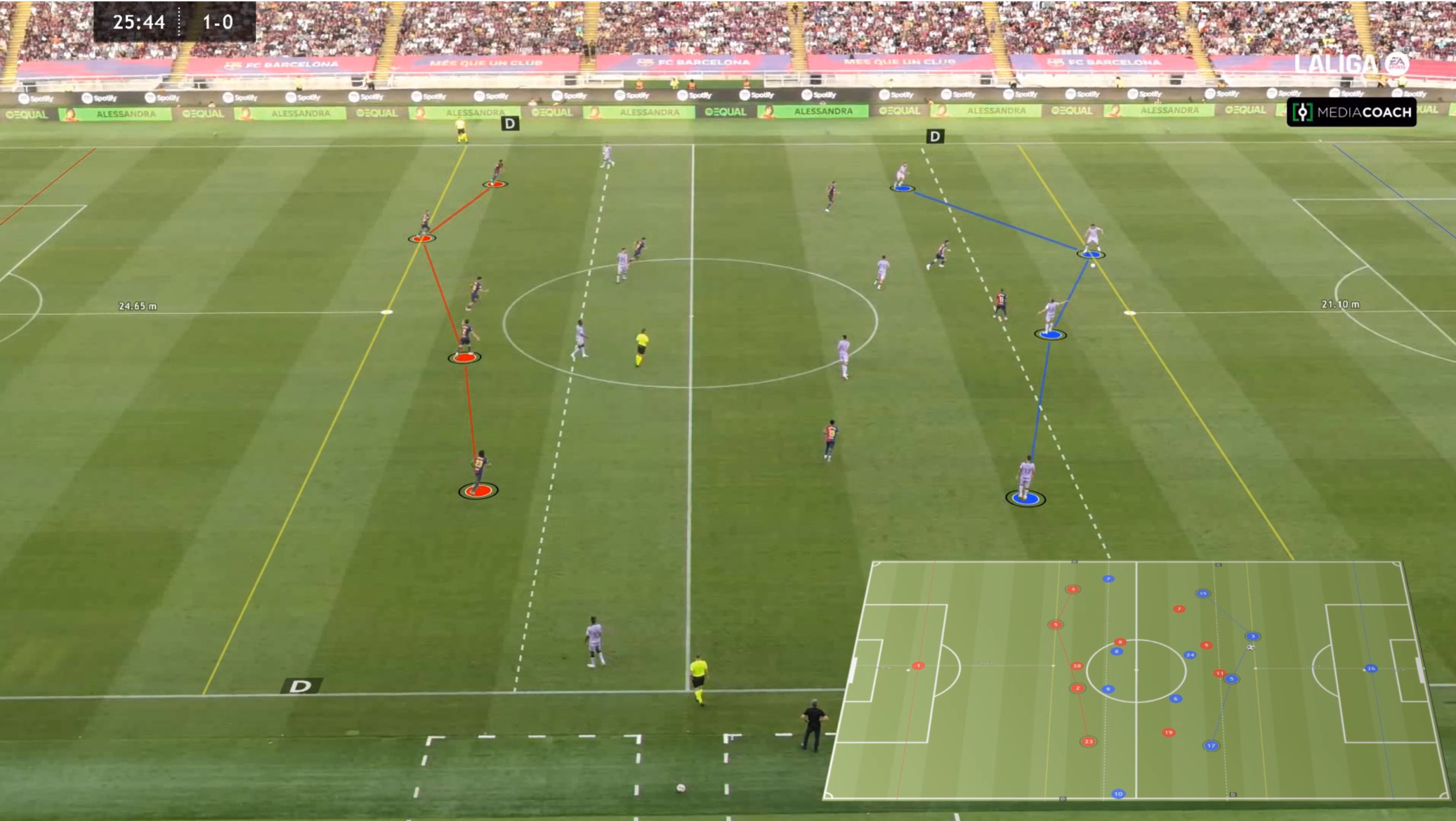
21 Oct How Adjusting the Defensive Line Can Change the Outcome: Practical Applications for Professional Football
In football, every move counts. Our recent research has shown that the positioning of the defensive line throughout a match is not just a reaction to the scoreline but a key tactic that can directly influence the final result. Knowing when to push the defensive line forward or pull it back can be the difference between winning, drawing, or losing, and it’s an aspect that coaches can use to improve both their training sessions and match-day strategies.
Methodology
For this research, we analyzed data from the 2023/24 Season of LALIGA EA Sports, focusing on how variations in the defensive line position impacted match outcomes. The analysis included the overall defensive position, defensive positioning during possession, and positioning when the opponent had possession.
Match Selection Criteria:
We selected only those matches where there was a change in the scoreline between the end of the first half and the end of the match. This allowed us to identify patterns in how teams—whether winning, drawing, or losing—strategically adjusted their defensive line and observe the effects of these adjustments on the final score.
Key Results and Practical Applications
1. Pushing the defensive line forward when trailing can help equalize or win.
Teams that were losing at halftime and pushed their defensive line forward by at least 3 meters on average managed to equalize or win the match. This tactic, particularly during possession, increases pressure on the opponent and compresses the field, forcing mistakes or turnovers in more dangerous areas.
Use Case: If your team is trailing, a proactive adjustment in the second half to push the defensive line forward can help regain control of the game and create opportunities closer to the opponent’s goal.
2. Pulling the defensive line back when winning can help maintain the lead, but don’t overdo it.
We found that teams that were leading and decided to pull their defensive line back in the second half maintained their advantage, but if the retreat was too drastic (over 3 meters), they tended to draw or even lose. This suggests that pulling the defensive line back should be done strategically, balancing solid defense with the possibility of counterattacks.
Use Case: If you’re leading, slightly pulling the defensive line back can help protect the lead, but without completely giving up control and attacking opportunities.
3. Changes in possession and pressuring the opponent are crucial.
Our research showed that when a team pushed its defensive line forward during possession, they significantly improved their results. This supports the idea that gaining territory on the field allows you to increase pressure on the opponent. On the other hand, pulling the defensive line back when the opponent has possession can help avoid counterattacks, but only if done with the ability to reorganize quickly.
Use Case: Training that focuses on defensive coordination to push the line forward during possession is key to effectively pressing the opponent while maintaining tactical discipline.
Conclusion
Coaches who master defensive line adjustments have a powerful tool to influence match outcomes. Pushing or pulling the line should not be an improvised decision but a strategic move based on the scoreline and match circumstances. With the data gathered, specific training patterns can be established to manage these situations and improve player performance.