


21 Abr A longitudinal analysis of technical-tactical and physical performance of the teams in the Spanish LaLiga Santander: An eight-season study
Posted at 13:09h
in Paper
Practical Summary for Coaches and Analysts
How has LaLiga Santander evolved over the last decade? This eight-season study (2011/12–2018/19) analyzed more than 5,500 team performances to identify long-term trends in technical-tactical and physical indicators of Spanish top-flight football.
Key findings
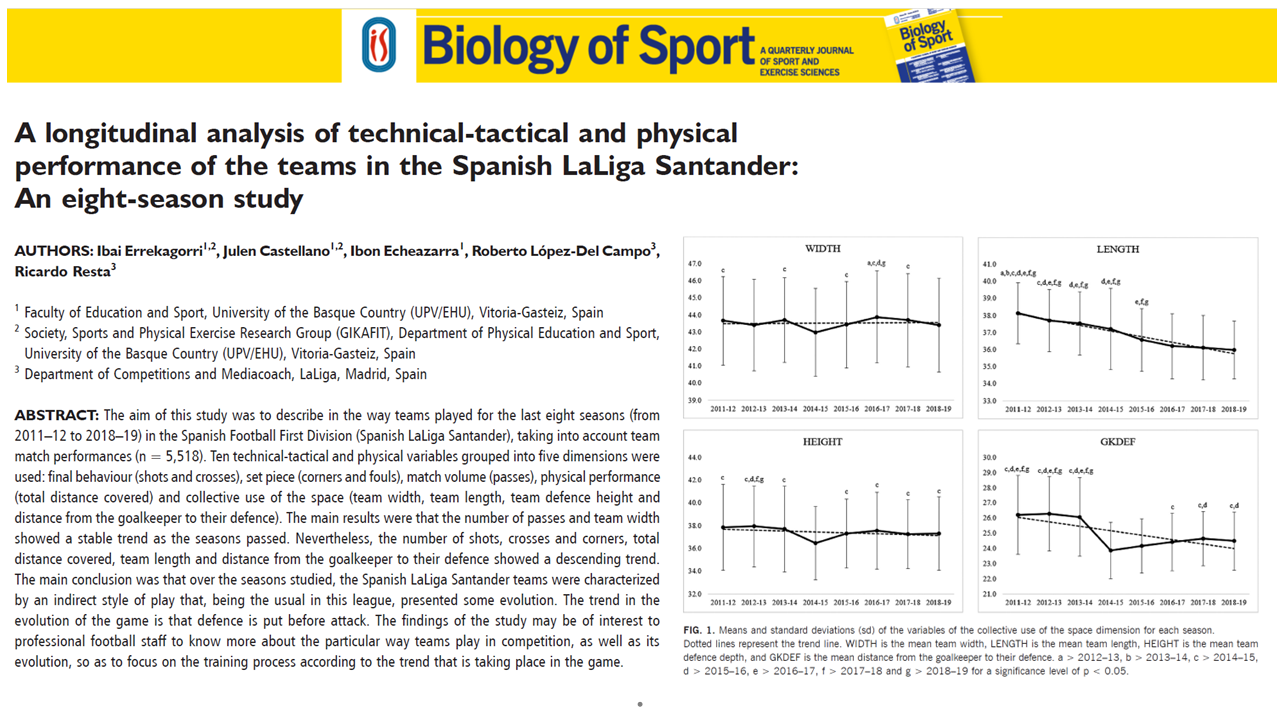
- Possession remains central. The number of passes and team width stayed relatively stable across the years, reinforcing LaLiga’s reputation for a possession-based style.
- Decline in direct attacking actions. Shots, crosses, and corners decreased significantly, showing fewer arrivals in the opponent’s box.
- Reduced physical output. Total distance covered (KM) also decreased across seasons, suggesting less box-to-box play.
- Defensive organization increased. Teams progressively reduced their length and the distance from goalkeeper to the back line, reflecting a more compact defensive structure.
- Efficiency over quantity. Despite fewer attacking actions, the average number of goals per match stayed stable (~2.8 per game). Teams are now prioritizing quality of actions over volume.
What this means in practice
- Training design must reflect compact play. Coaches should prepare players to operate effectively in tighter spaces, with emphasis on precision passing, pressing, and transitions.
- Focus on efficiency. With fewer shots and set pieces, training should replicate scenarios that demand high decision-making efficiency in the final third.
- Defensive evolution matters. The trend toward shorter team length and reduced GK-defence distance highlights the importance of coordinated defensive lines and goalkeeper positioning.
- Scouting implications. Clubs should identify players who excel in compact, possession-oriented systems — technically secure, able to operate under pressure, and capable of high-intensity actions when needed.
In short: LaLiga football has evolved toward stronger defensive structures, fewer but more efficient attacking actions, and a playing style that remains rooted in possession.