


28 Sep How do the football teams play in LaLiga? Analysis and comparison of playing styles according to the outcome
Modern football is not just about what teams do, but how and when they do it. This study takes a full-season, data-driven look at how teams in LaLiga actually play, and—more importantly—how those playing styles are linked to winning, drawing, or losing matches.
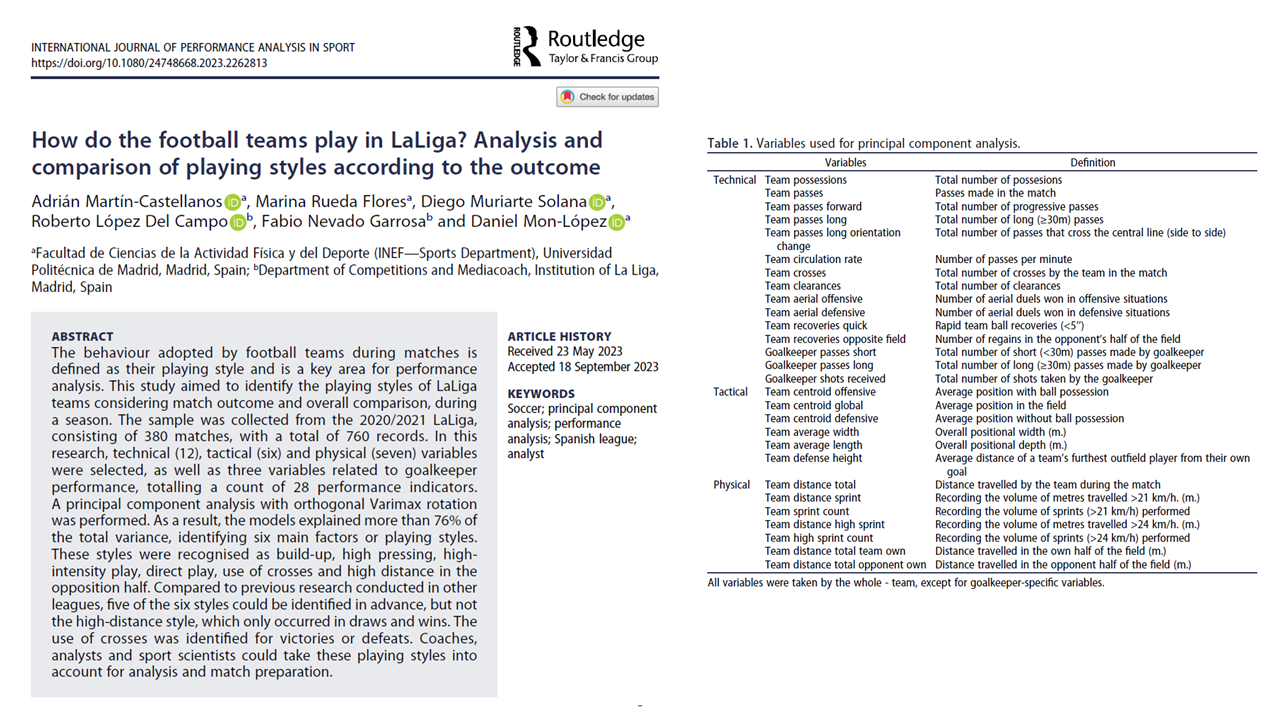
Using all 380 matches of the 2020/21 LaLiga season, the research analysed technical, tactical, physical, and goalkeeper-related performance indicators to identify the dominant playing styles across the league. Instead of subjective labels, the study used objective performance data to reveal six clearly defined playing styles that explain almost 80% of the game behaviour observed.
What playing styles really define LaLiga?
The analysis identified six main styles that consistently appear across teams and match outcomes:
1. Build-up play
This is the most dominant style in LaLiga. Teams prioritise structured possession, short passing, goalkeeper involvement, width, and controlled progression from the back. It is especially associated with winning matches.
Practical takeaway: If your team wants control and consistency, build-up play is not just a philosophy—it is statistically linked to success in LaLiga.
2. High pressing
Defined by high defensive lines, aggressive positioning, and ball recoveries in the opponent’s half. This style appears strongly when teams are losing or chasing the game.
Practical takeaway: High pressing is often a reaction rather than a starting plan. Coaches should manage its physical and tactical risks, especially over long periods.
3. High-intensity play
Characterised by sprinting, repeated high-speed actions, and intense physical output. This style cuts across outcomes and is closely linked to transitions.
Practical takeaway: High intensity supports tactical aggression but requires careful load management and squad depth.
4. Direct play
Long passes, aerial duels, quick recoveries, and less time spent in the opponent’s half. This style often reflects deeper defensive blocks and fast attacks.
Practical takeaway: Direct play can be functional, but on its own it is not consistently associated with winning in LaLiga.
5. Use of crosses
Wide attacks, long balls, and frequent crossing actions. Interestingly, this style appears both in wins and losses, but not in draws.
Practical takeaway: Crossing-heavy approaches are high-risk, high-reward strategies—useful when chasing a result, but unstable as a base model.
6. High distance in the opponent’s half
A unique style identified in this study, linked to sustained activity and pressure in advanced zones. It only appears in wins and draws.
Practical takeaway: Playing far from your own goal matters. Territorial dominance, not just possession, can tilt outcomes in your favour.
Why this matters for coaches and analysts
This research moves beyond labels like “possession team” or “direct team” and provides measurable performance fingerprints for each style. For first-team staff, this means:
- Better opponent scouting based on how teams actually behave, not reputations
- More accurate match preparation, adjusting game plans according to likely scenarios
- Clearer links between physical demands and tactical decisions
- Smarter recruitment and squad planning, aligned with your playing model
Most importantly, the study shows that teams do not win just by running more or pressing higher, but by aligning technical, tactical, and physical behaviours with the demands of each match situation.
Bottom line for the professional game
There is no single “best” style—but there are styles that are more likely to win in LaLiga. Build-up play and territorial dominance consistently appear in positive outcomes, while high pressing and crossing-heavy strategies often reflect situational needs rather than long-term control.
Understanding these patterns allows coaches, analysts, and performance staff to design training, match plans, and squad profiles that are grounded in evidence, not trends.