


30 Oct Recovery Strategies in the Opponent’s Half: Adjusting Defense to Maximize Efficiency on the Field
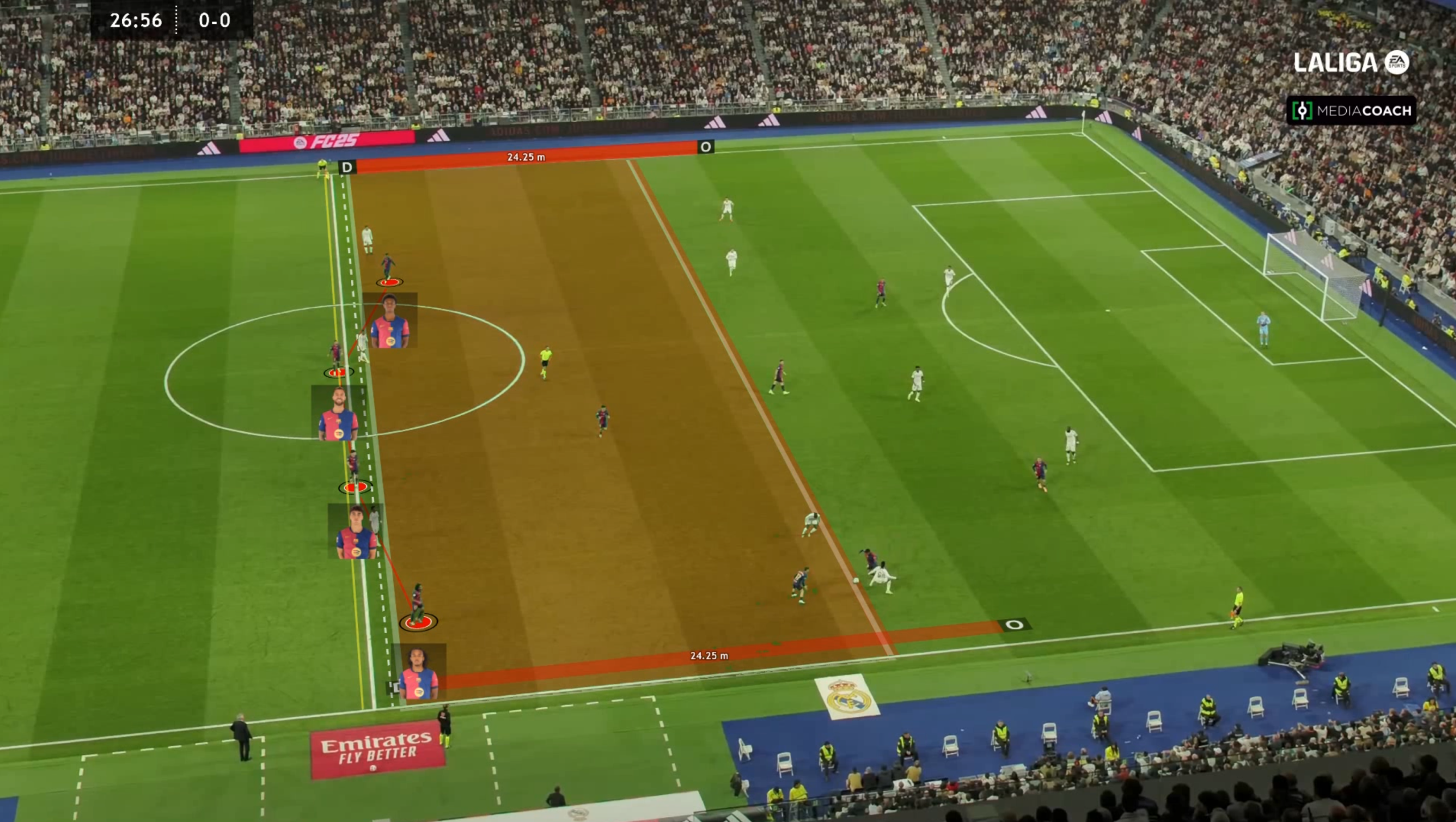
For football coaches, understanding how to adjust the defensive line and pressing in the opponent’s half can significantly impact team performance, especially in recovering possession in advanced areas. This research, based on data from LALIGA EA Sports, 2023/24 Season, sheds light on how defensive positioning and depth directly influence the ability to win the ball back in the opponent’s half, which can be key in defining pressing and recovery strategies.
Methodology: Metric Definitions and Analytical Approach
This analysis uses several defensive metrics to define each team’s defensive recovery patterns:
- Recovery Height: The average distance between the team’s own goal and the recovery point in the opponent’s half. This indicates where on the pitch the team aims to win the ball back.
- Defensive Line: The distance of the defensive line from the team’s own goal when not in possession, indicating how far forward the team’s defensive structure is.
- Recovery Depth: The distance in meters between the defensive line and the recovery height, representing the average space the team leaves between these two points.
- Adjusted Recovery Efficiency in the Opponent’s Half: Calculated by adjusting total recoveries in the opponent’s half for the opponent’s possession time, giving a more accurate view of a team’s ability to recover the ball in advanced areas, regardless of possession time.
Results of the Analysis: Correlations and Regression
To validate the findings, correlation and regression analyses were conducted to highlight key relationships between positional metrics and recovery efficiency:
- Positive Correlation: A strong correlation (0.71) was found between recovery height and adjusted recovery efficiency, suggesting that teams with a higher recovery height achieve more recoveries in the opponent’s half.
- Combined Influence: A multiple regression model showed that recovery height, defensive line, and recovery depth each contribute significantly to recovery efficiency in the opponent’s half, explaining 55% of the variance in recoveries.
- Interaction Analysis: Including interaction terms among the metrics revealed that combining a higher defensive line and recovery height creates additional effects in recovery success, maximizing control in advanced areas.
Defensive Recovery Profiles in the Opponent’s Half
The principal component and clustering analysis grouped the 20 teams in LALIGA EA Sports into four distinct clusters, each reflecting a recovery style with specific applications on the field:
- Cluster 0 – Balanced and Secure Recovery (5 teams):
- Teams: Real Betis, Sevilla FC, UD Las Palmas, Valencia CF, Villarreal CF.
- Defensive Style: These teams prefer a balanced style, with a medium block and moderate recovery in the opponent’s half. They tend to stay organized defensively and avoid high pressing that might disrupt their structure. Their focus on structured and secure recovery allows them to close down quickly without compromising positioning.
- Cluster 1 – Compact and Reactive Block (5 teams):
- Teams: Girona FC, Granada CF, Rayo Vallecano, RC Celta de Vigo, Real Sociedad.
- Defensive Style: They prioritize defensive solidity with a compact block in their own half, waiting for the opponent to advance to capitalize on recovery opportunities. This profile is characterized by reactive defense and limited pressing in the opponent’s half, minimizing exposure in case of turnovers.
- Cluster 2 – High and Aggressive Pressing (5 teams):
- Teams: Athletic Club, CA Osasuna, FC Barcelona, Getafe CF, Real Madrid.
- Defensive Style: These teams press high in the opponent’s half, aiming to overwhelm the opponent with quick and aggressive recovery. A high defensive line and advanced recovery height allow them to maximize recoveries close to the opponent’s goal. This strategy requires coordinated pressing and is best suited against opponents who struggle to manage pressure in advanced areas.
- Cluster 3 – Resilient Defense and Efficient Transitions (5 teams):
- Teams: Atlético de Madrid, Cádiz CF, Deportivo Alavés, RCD Mallorca.
- Defensive Style: They favor a low, organized defense with a focus on counterattacks after recovering in their own half. Recoveries in the opponent’s half are less frequent, but their compact defensive structure minimizes the risk of defensive breakdowns and enables quick counterattacks when they regain possession.
Practical Applications: How to Implement These Findings in Training
For coaches, these results provide a tactical guide grounded in objective data:
- Recovery and Defensive Depth Training: Teams with high pressing profiles can focus training on rapid reorganization after a recovery or turnover, while reactive teams can optimize block coordination to close down space. Training drills that simulate both approaches will enhance players’ understanding of both high and reactive recovery strategies.
- Match Strategy Planning: Against teams that manage possession well, high-pressing teams (Cluster 2) can apply intense pressure from the start. Conversely, against teams that concede possession, reactive profiles can wait to intercept and counterattack where the opponent is most exposed.
This study converts data into a valuable tool for designing training plans and preparing more effective match strategies based on evidence.