


21 Feb Influence of the Weekly and Match-play Load on Muscle Injury in Professional Football Players
Posted at 13:06h
in Paper
Muscle injuries are the most common setback in professional football, often striking at decisive points of the season. This study followed LaLiga players to understand how weekly training load and match-play demands increase the risk of muscle injury, with a special focus on what happens in the minutes leading up to an incident.
Key insights for coaches and performance staff:
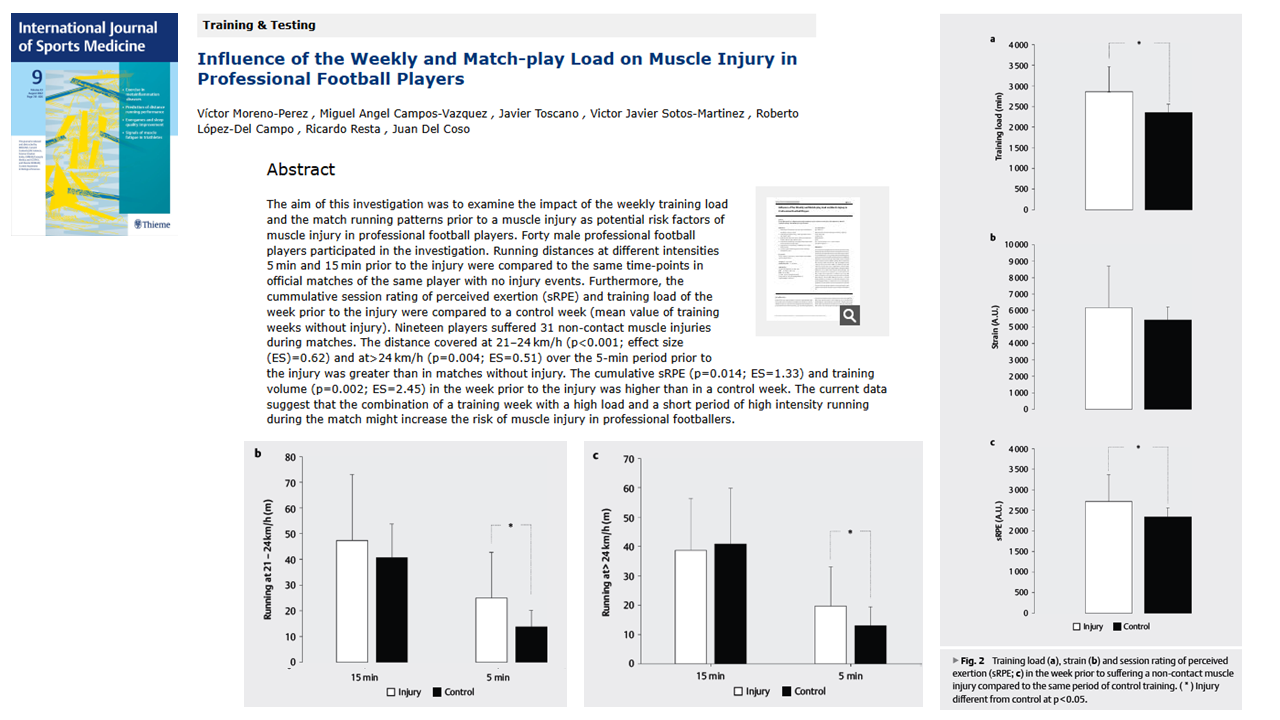
- Load accumulation matters: In the week prior to a muscle injury, players showed significantly higher training volumes and perceived exertion (sRPE) compared with control weeks without injury.
- The danger window: Most injuries occurred in the final 15 minutes of matches, especially during short accelerations when fatigue was already present. Running more than usual at 21–24 km/h or >24 km/h in just 5 minutes before an incident increased injury odds by up to 3.5 times.
- Fatigue as a key driver: Chronic fatigue from a congested calendar, combined with acute fatigue late in games, created the perfect storm for hamstring and quadriceps injuries.
- Not just about distance: Total distance did not predict injuries—rather, it was the high-intensity efforts during short, fatigued periods that posed the greatest risk.
Practical applications:
- Monitor both internal load (sRPE) and external load (high-speed running, sprints) weekly to identify players at risk.
- Plan recovery microcycles for players exposed to high training volume or reporting unusually high exertion before matches.
- Use real-time match data to adjust substitution strategies, especially when players accumulate high loads and are approaching fatigue thresholds late in games.
- Focus on fatigue management across the season, particularly during congested fixture periods, to minimize injury burden.
Read the full paper here (DOI): https://doi.org/10.1055/a-1533-2110